From November 2024 I built and ran DriveStay, a driveway parking marketplace for SoFi Stadium events, as its only engineer. It went live with its first hosts in April 2026 and by 2026-10-19 had taken 20 paid bookings worth $1,265 gross from 15 live hosts, with its best month, June 2026, bringing $368.50 during the World Cup before any money had been spent on ads. Everything below runs on a Go API with PostgreSQL on AWS, a React Native app on iOS and Android, three React web apps, Cognito for login and Stripe for payments and host payouts. Two of the systems, the mobile app and the booking site, are public and can be checked by anyone with a browser.
DriveStay is a parking marketplace where Inglewood, CA homeowners rent out their driveways to people going to events at SoFi Stadium, the Kia Forum and Intuit Dome. It served two sides: local hosts who listed a space through a web form and managed it in the app, and guests who found a space by QR code or in the app and paid by card without creating an account. I was the only engineer, building and operating the Go backend, the iOS and Android app, three web apps and the AWS and Stripe infrastructure. The real scale is small: between the first live hosts in April 2026 and the last data refresh on 2026-10-19, 15 hosts were live, 146 bookings were created and 20 were paid, for $1,265 gross, with the busiest month being June 2026 during the World Cup at $368.50. As of November 2026 it is still live in production, app version 1.4.7 shipped on 2026-11-03, but bookings have fallen to a handful per month and demand, not supply, is the open problem.
I was DriveStay's sole engineer, and none of it was vibe coded. I chose the architecture and the patterns, then used coding agents to build faster. From late 2024 to mid 2025 that was Aider, then Claude Code. In one refactor I wrote up at the time, I split the work into about 20 Markdown steps and scripted Claude Code to run them: 1,893 lines changed in under 5 minutes of execution, with most of my time spent on the design and the decomposition. Minion, my own agent that turns GitHub issues into pull requests, went live in April 2026, after the backend, mobile app and infrastructure were built, and sped up the web apps and later changes. Of 100 merged Minion pull requests traced since October 2026, 78 needed no fix.
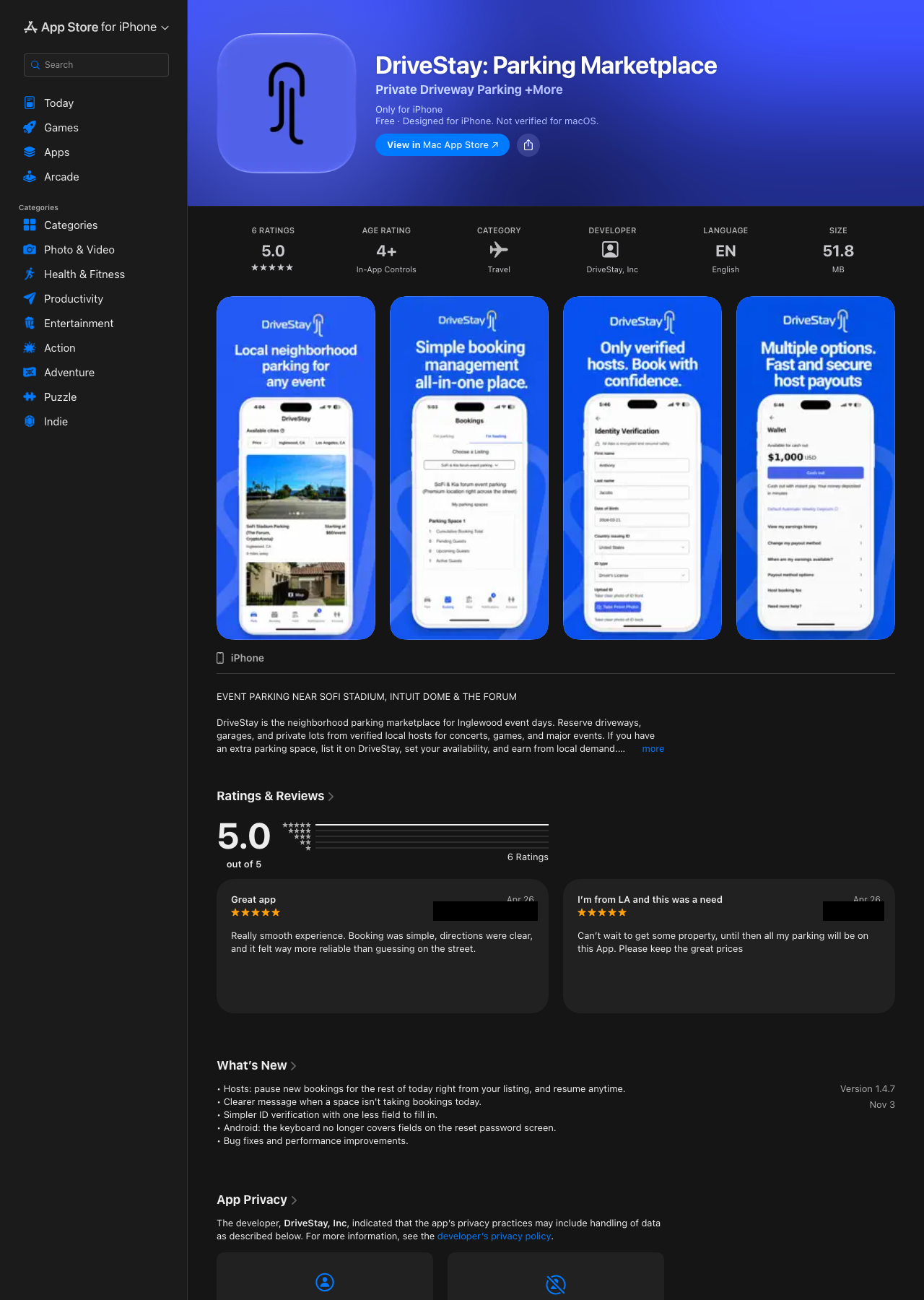
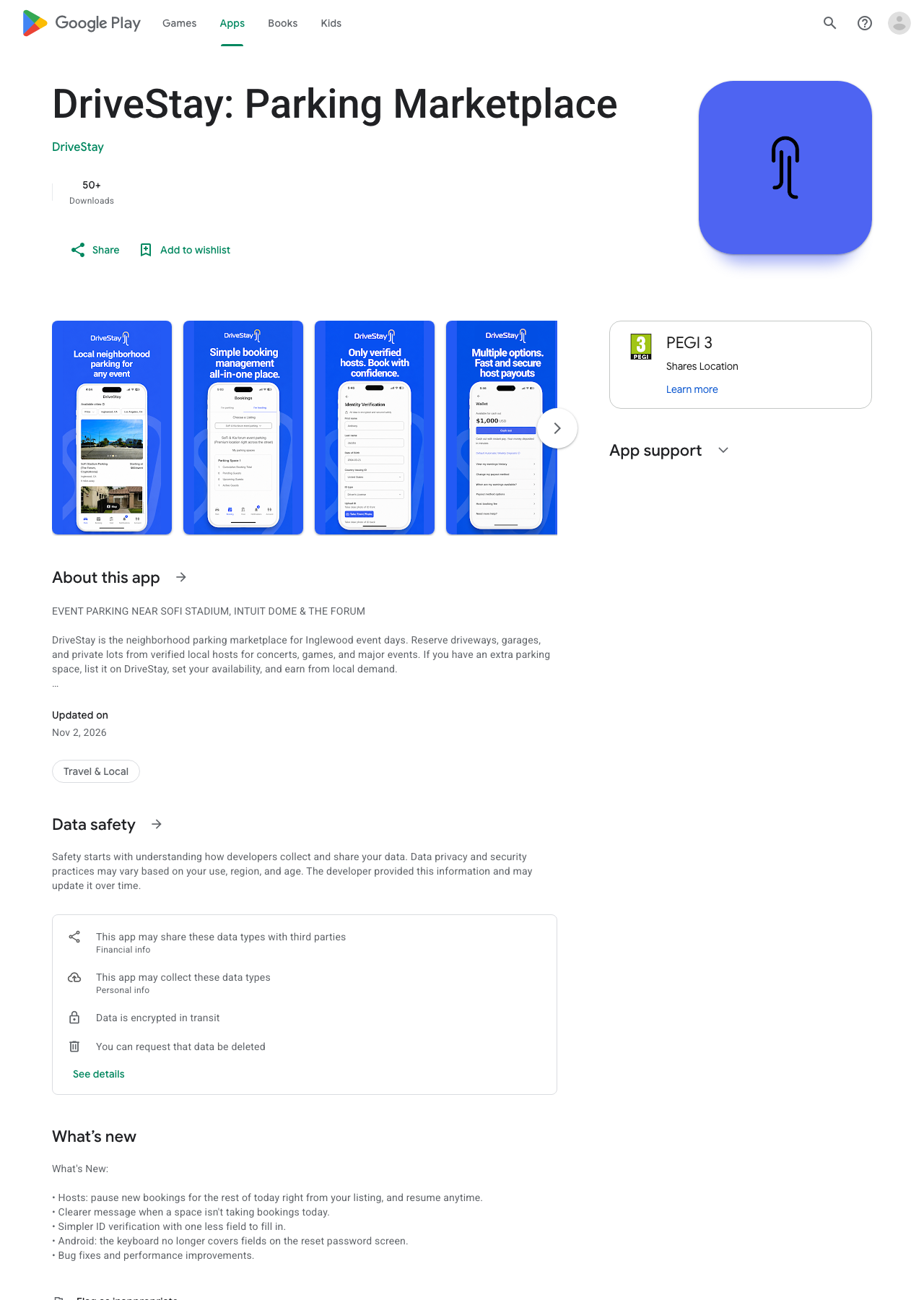
Hosts needed to list a driveway, accept or decline bookings, pause a space on a game day and get paid, and guests needed to find and book a space near the stadium from their phone. Both sides had to work on iOS and Android with one engineer maintaining them. I built one React Native app that carries both roles, with phone-number OTP login through Cognito, listing and booking screens, Stripe Connect payouts into a host wallet, and push notifications over FCM and APNs. The decision I want to point at is the force-update gate: every request sends an X-App-Version header and the backend answers 426 Upgrade Required below a minimum version set in config. I made it because released builds in the field double-prepended image URLs, and without a gate I could never ship the backend fix that would break them; the gate let me block old builds before changing the contract. In production the app shipped to TestFlight and the Play Store from one deploy script, reaching version 1.4.7 on 2026-11-03, with a 5.0 rating from 6 App Store reviews and 50+ Play installs. Hosts ran 15 live listings through it and received released payouts of $40.50 to $90 per booking from June to October 2026. The hard production lesson was fulfillment, not code: hosts also list on competing apps, and in October 2026 a double-booked driveway left a guest stranded, which the app had no way to detect or reassign. The store listings below are public and anyone can open them to check the version and ratings.
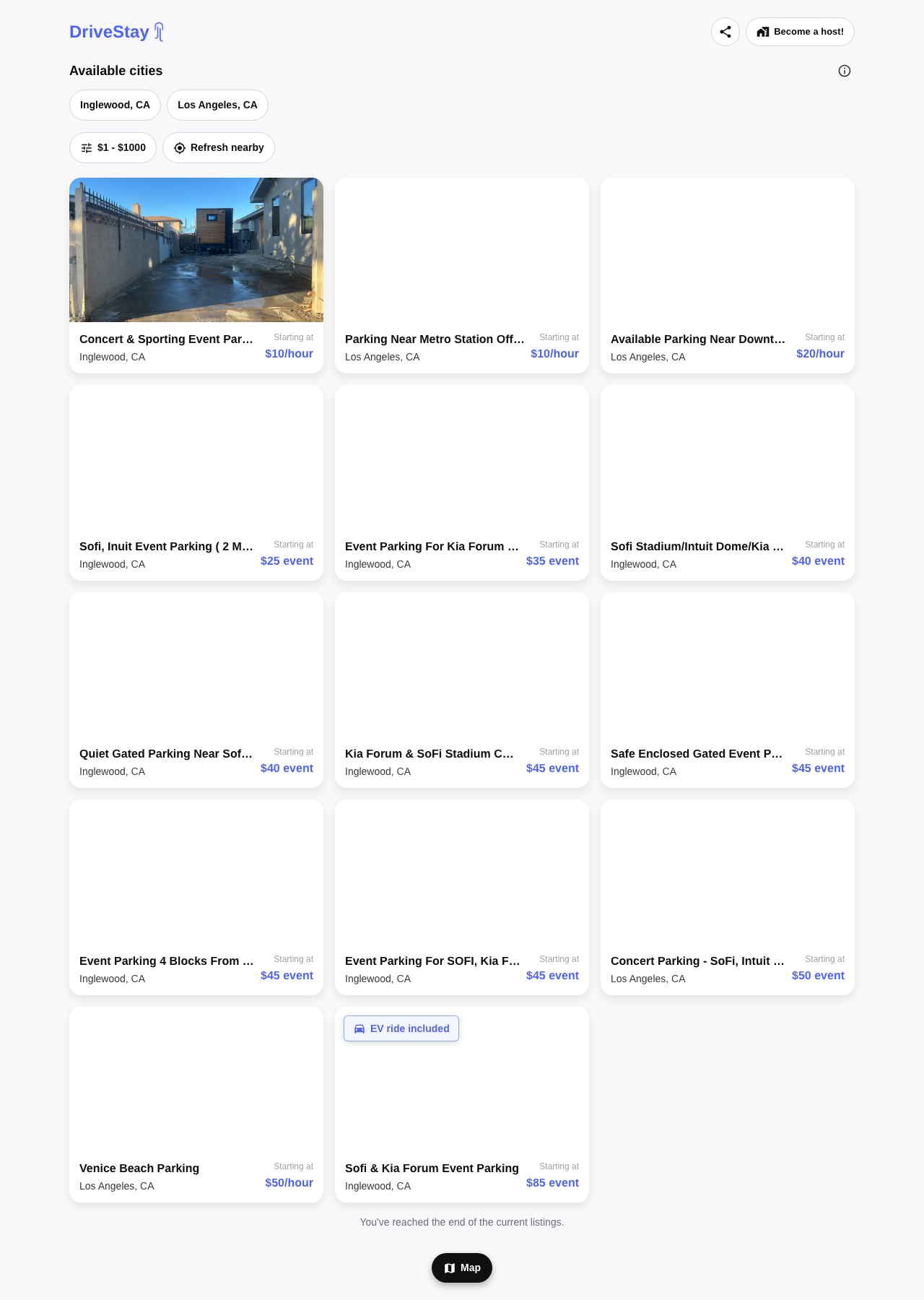
A guest standing at a curb minutes before kickoff, having scanned a QR code on a host's sign, has to be able to pay for the space before they lose patience, on a phone, with no app installed. I built a four-page static web funnel in React and Vite: landing with the listings, listing detail, Stripe checkout and confirmation, and a booking pass the guest shows the host. The decision was to require no account at all: the guest pays through a Stripe PaymentIntent, the webhook confirms the booking, and a claim token in the pass link lets them attach the booking to an account later if they ever install the app. I made it because every sign-up step at that moment costs bookings, and the host only needs proof of payment, not an identity. In production this funnel carried most guest bookings rather than the app, including the four paid June 2026 bookings worth $368.50 during the World Cup. The pages were slow at first because the landing eagerly loaded about 40 MB of full-resolution host photos, so I cut it to lazy cover images and a preconnect to the CDN. The site is live at book.drivestayapp.com and anyone can open it and compare it with the screenshot below.
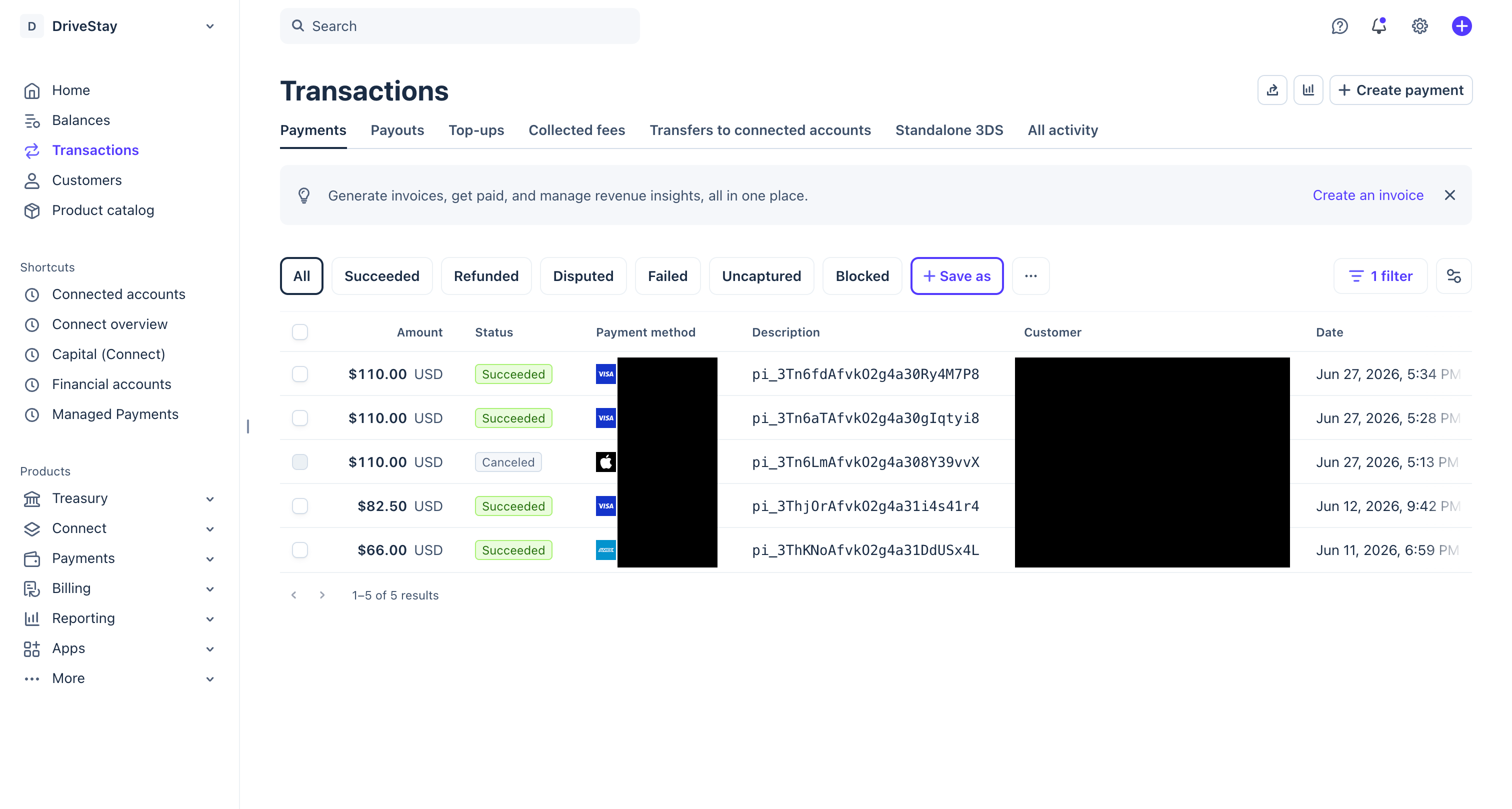
The June 2026 charges those bookings produced, as recorded in Stripe:
01-stripe-june-2026-bookings.png.04-ds-host-onboarding.png.05-admin-payouts.png.06-triage-skill-code.md.07-api-types-code.md.08-deploy-changelog-and-tags.md.09-minion-pr-184.md.10-growth-facts-current.json, 10-growth-skill-snapshot.md.11-marketing-instagram-drivestayapp.png, 11-marketing-posts-log.jsonl.You can reach me at pol.bachelin@gmail.com.